
Maya Angelou’s poignant poem explores the profound impact of loss, mirroring nature’s reaction to the fall of influential figures.
The verses delve into the widespread shock and grief experienced when significant individuals pass away, creating a ripple effect.
This exploration uses vivid imagery, connecting natural responses to human emotions, ultimately revealing universal truths about mortality.
Overview of the Poem
“When Great Trees Fall” is a powerful and evocative poem by Maya Angelou, utilizing extended metaphor to explore the repercussions of significant loss. The poem doesn’t focus on a specific individual’s death, but rather the universal experience of grief and the disruption caused when influential figures are gone.
Angelou masterfully employs natural imagery – the falling of trees, the reactions of animals, and shifts in the environment – to parallel human responses to death. This creates a sense of immense scale, demonstrating how such losses affect not only those directly connected, but the wider world.
The poem’s structure builds a feeling of oppressive silence and fear, highlighting the profound impact of losing guiding forces. It’s a meditation on influence, vulnerability, and the enduring power of grief.
Historical Context of the Poem
“When Great Trees Fall”, though not explicitly tied to a single historical event, resonates with the turbulent socio-political climate of the mid-20th century, a period marked by significant loss and upheaval. Angelou, a prominent voice in the Civil Rights Movement, witnessed firsthand the assassinations of leaders like Martin Luther King Jr. and Malcolm X.
While the poem isn’t about these specific events, the pervasive sense of grief and the fear of losing guiding figures undoubtedly informed its creation. The poem speaks to a collective trauma, reflecting a time when societal structures were challenged and icons fell.
It’s a testament to Angelou’s ability to translate personal and communal pain into universal themes of loss and resilience.
Maya Angelou’s Poetic Style
Maya Angelou’s poetic style is characterized by its lyrical quality, evocative imagery, and powerful emotional resonance. She frequently employs free verse, allowing for a natural, conversational tone while maintaining rhythmic flow. “When Great Trees Fall” exemplifies this, utilizing extended metaphors drawn from the natural world to explore complex human emotions.
Angelou’s work often incorporates elements of African American oral tradition, including call-and-response patterns and a strong sense of storytelling. Her language is accessible yet profound, making her poetry relatable to a wide audience.
She masterfully uses symbolism and sensory details to create a deeply immersive reading experience.
The poem depicts nature’s reaction to significant loss, paralleling human responses of shock, silence, and fear following the death of influential figures.
The Initial Impact of Loss

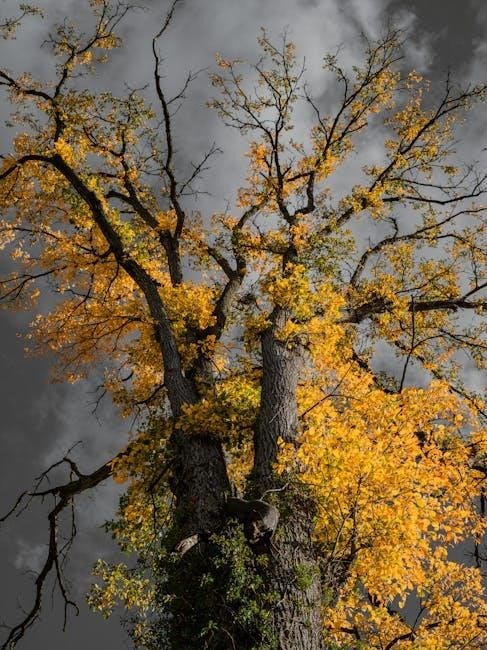
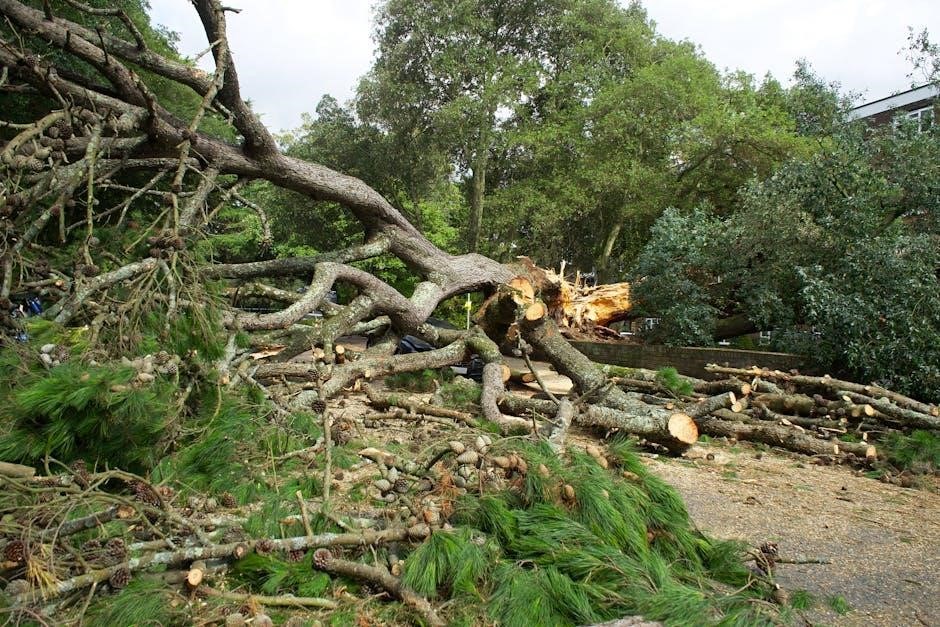
The poem immediately establishes a sense of overwhelming impact with the image of “great trees” falling. This isn’t a gentle decline, but a forceful event that reverberates through the entire ecosystem.
Initially, the reaction is one of stunned silence; “small things recoil in silence,” suggesting a primal, instinctual withdrawal. This isn’t simply sadness, but a profound shock that erodes even the capacity for fear.
The loss is so significant that it disrupts the natural order, causing a widespread sense of dismay and disorientation among all living things, mirroring human grief.
Reactions in the Natural World
Angelou masterfully personifies nature, depicting a world thrown into disarray by the loss of “great trees.” Powerful creatures, like lions, aren’t emboldened but instead “hide in tall grasses,” symbolizing a loss of courage and dominance.
Even the elements respond – the sun “refuses to shine,” and the moon enters a state of “mourning,” creating a symbolic darkness that reflects the grief. Rivers and mountains themselves seem to lament the passing.
The air becomes “heavy,” and birds fall silent, signifying a loss of joy and vitality, illustrating nature’s deep emotional connection to the fallen.
Human Responses to Significant Deaths
Angelou draws a parallel between the natural world’s reaction and human responses to profound loss. Those who admired or depended on the “great trees” – influential figures – experience “dismay, disarray, and distraught.”
The poem suggests a sense of being overwhelmed, with senses “eroded beyond fear,” indicating a shock so deep it surpasses typical emotional responses. This profound impact creates a ripple effect, touching countless lives.
The poem captures the collective grief and disorientation felt when a guiding force is removed, highlighting the vulnerability of those left behind.
Detailed Analysis of Key Themes
The poem’s central themes revolve around loss’s ripple effect, the ensuing silence, and primal fear responses to impactful deaths, deeply affecting individuals.
The Ripple Effect of Loss
Angelou masterfully illustrates how the death of an influential person doesn’t exist in isolation; it generates a cascading series of reactions. The poem emphasizes that significant loss profoundly affects not only those closest to the deceased but extends outwards, impacting wider communities and even the natural world.
This “ripple effect” manifests as widespread shock, sadness, and a sense of disorientation. The poem’s imagery – recoiling small things, hiding lions – symbolizes how individuals and entities, regardless of power, are destabilized by such a loss. It’s a testament to the interconnectedness of life and the far-reaching consequences of mortality.
The Silence Following a Great Loss
A striking element within “When Great Trees Fall” is the pervasive silence that descends after a significant death. This isn’t merely an absence of sound, but a profound stillness representing shock, disbelief, and the inability to articulate the magnitude of the loss. The poem notes “small things recoil in silence,” suggesting a withdrawal and a numbing of senses.
This silence symbolizes a collective pause, a moment where the world seems to hold its breath. It’s a space for grief to settle, for individuals to process the void left behind, and for the realization of an altered reality to sink in. The silence is heavy with unspoken emotions.
Fear and Instinctual Reactions
Angelou masterfully portrays fear and instinctual reactions to loss through powerful natural imagery. The poem depicts “lions hide in tall grasses,” a startling image suggesting even the most powerful succumb to primal fear when confronted with immense grief. This isn’t a fear of physical danger, but a deeper, instinctual response to a disruption of the natural order.
This imagery highlights the vulnerability inherent in all beings, regardless of strength or status. The instinct to hide represents a desire for self-preservation in the face of overwhelming emotion, a retreat from the painful reality of loss. It’s a raw, unfiltered response.

Line-by-Line Explanation
This section provides a detailed examination of each line, unraveling Angelou’s rich symbolism and exploring the poem’s emotional depth and layered meanings.
We will dissect the imagery and figurative language to understand the poem’s core message.
“When great trees fall…” ⎻ Initial Imagery
The opening line immediately establishes a powerful and unsettling image, evoking a sense of immense loss and disruption within the natural world. Angelou utilizes the “great trees” as a metaphor for influential or important figures whose passing reverberates through society.
This initial imagery sets the stage for the poem’s exploration of grief and the far-reaching consequences of significant deaths. The falling of these trees isn’t merely a physical event; it’s a cataclysmic occurrence that impacts everything around it, prompting a profound reaction from all living things.
The phrase suggests a sense of inevitability and the humbling power of nature and mortality.
“…small things recoil in silence…” ⎻ The Response of the Vulnerable
This line depicts the reaction of those less powerful or influential to a significant loss, highlighting their vulnerability and fear. The “small things” symbolize individuals who are affected by the passing of a “great tree,” experiencing a sense of dismay and disorientation.
The phrase “recoil in silence” suggests a withdrawal and a suppression of emotion, born from a profound shock that transcends even fear itself. Their “senses eroded beyond fear” indicates a state of utter disbelief and paralysis, unable to process the magnitude of the loss.
It’s a poignant portrayal of helplessness.
“…their senses eroded beyond fear.” ⎻ Profound Shock
This powerful line transcends a simple reaction to fear, illustrating a state of complete and utter shock where even the instinct for self-preservation is overwhelmed. The “erosion of senses” suggests a numbing of perception, a disconnect from reality caused by the sheer magnitude of the loss.
It implies that the impact is so profound it surpasses the capacity to feel fear, leaving only a hollow emptiness. This isn’t bravery, but a psychological shutdown, a defense mechanism against unbearable grief.
The phrase conveys a sense of devastation and helplessness.
“…lions hide in tall grasses…” ─ Loss of Power and Courage
The image of lions, traditionally symbols of strength, courage, and dominance, seeking refuge in tall grasses is strikingly symbolic. This isn’t a display of strategic retreat, but a desperate act of self-preservation in the face of overwhelming loss. It signifies a complete dismantling of power and a surrender of bravery.
Even the most formidable creatures are rendered vulnerable, highlighting the universality of grief’s impact. The tall grasses offer minimal concealment, emphasizing the lions’ exposed and diminished state.
It’s a poignant metaphor for the loss of authority.
“…the sun refuses to shine…” ⎻ Symbolic Darkness
The line “the sun refuses to shine” transcends literal weather patterns, functioning as a powerful symbol of profound despair and the extinguishing of hope. The sun, universally representing life, energy, and optimism, withdrawing its light signifies a world plunged into emotional darkness following a significant loss.
This isn’t merely sadness; it’s a complete absence of joy and vitality. The refusal implies a deliberate act, as if even the cosmos mourns the fallen “great tree.”
It’s a bleak, yet evocative, depiction of grief’s all-encompassing nature.
“…the moon is in mourning..;” ⎻ Universal Grief
The image of “the moon is in mourning” expands the scope of grief beyond the earthly realm, suggesting a cosmic sorrow. Traditionally linked to emotions, cycles, and the subconscious, the moon’s mourning personifies a universal acknowledgement of loss.
It implies that the impact of a “great tree’s” fall isn’t confined to humans or even the animal kingdom, but resonates throughout existence. This celestial grief elevates the significance of the loss, portraying it as a disruption to the natural order.
It’s a deeply empathetic and expansive image.
“…the rivers and mountains…” ─ Nature’s Lament
The inclusion of “the rivers and mountains” in the poem’s lament further emphasizes the all-encompassing nature of grief. These enduring, powerful elements of the landscape represent stability and timelessness, yet even they are affected by significant loss.
Their participation suggests that the death of an influential figure isn’t merely a human tragedy, but a disruption to the very foundations of the world. It’s a profound statement about interconnectedness, where even the most stoic and ancient entities share in the sorrow.
Nature itself grieves.
“…the air is heavy…” ⎻ Oppressive Atmosphere
The line “the air is heavy…” vividly portrays the suffocating emotional climate following a significant loss. This isn’t simply a description of weather; it’s a metaphorical representation of the weight of grief and the palpable sense of sorrow that permeates everything.
The heaviness suggests a stifling atmosphere, making it difficult to breathe – both literally and figuratively. It symbolizes the oppressive nature of grief, which can feel all-consuming and inescapable. This imagery reinforces the poem’s central theme of widespread impact.
It’s a feeling of being burdened;
“…the birds are silent…” ⎻ Loss of Joy
The silencing of birdsong in the poem is a powerful symbol of lost joy and vitality. Birds, traditionally associated with freedom, happiness, and the celebration of life, fall silent, mirroring the emotional desolation caused by a significant death.
This absence of sound isn’t merely a lack of noise; it represents a profound void, a cessation of the natural expressions of delight. The birds’ silence underscores the pervasive sadness and the disruption of harmony within the natural world, reflecting the human experience of grief.
It’s a world devoid of cheer.

Symbolism in the Poem
The “great trees” embody influential figures, while “small things” represent those affected by their loss. Nature’s reactions symbolize the mirroring of human emotional responses.
The “Great Trees” as Symbols of Influence
Within Angelou’s poem, the “great trees” transcend literal forestry, functioning as powerful symbols of influential individuals. These trees represent leaders, mentors, or anyone who has exerted significant impact on their community or the lives of others.
Their stature and strength mirror the authority and respect commanded by these figures during their lifetimes.
The falling of such a tree isn’t merely a natural event; it signifies the loss of guidance, protection, and a foundational presence.
This imagery evokes a sense of disruption and vulnerability, highlighting the far-reaching consequences of losing those who shape our world.
The “Small Things” Representing the Affected
Angelou masterfully employs “small things” – creatures and elements of nature – to symbolize those deeply affected by the loss of influential figures. These represent individuals who looked up to, relied on, or were simply touched by the “great trees.”
Their “recoil in silence, their senses eroded beyond fear” illustrates a state of profound shock and helplessness.
This isn’t a reaction of cowardice, but rather an overwhelming sense of disorientation and grief, where even instinctual responses are numbed.
The small things embody the vulnerability and fragility of those left behind, grappling with a world irrevocably altered.
Nature as a Reflection of Human Emotion
Throughout “When Great Trees Fall,” Angelou intricately weaves natural imagery to mirror the depth of human grief and the disruption caused by significant loss. The poem doesn’t merely describe nature; it equates nature’s response with human emotional turmoil.
The silence, the hiding lions, the refusal of the sun to shine – these aren’t isolated events, but symbolic representations of dismay and disorientation.
Nature’s lament becomes a universal expression of sorrow, amplifying the poem’s emotional resonance and highlighting the interconnectedness of all living things.

Critical Interpretations
Scholarly analyses reveal feminist perspectives, social commentary on power dynamics, and psychological insights into grief’s impact within Angelou’s powerful verses.
Feminist Readings of the Poem
Feminist interpretations of “When Great Trees Fall” often center on the silencing and marginalization experienced by women, particularly in positions of power. The “small things” recoiling in silence can be viewed as representing historically suppressed voices.
Angelou’s poem subtly critiques patriarchal structures where the loss of a powerful woman—a “great tree”—disrupts the established order, causing widespread instability and fear. The poem’s focus on instinctual reactions and the erosion of senses can symbolize the emotional and psychological toll of systemic oppression.
Furthermore, the natural world’s lament mirrors the collective grief of a society that has undervalued female leadership and influence, highlighting a profound sense of loss and disruption.
Social Commentary on Power and Loss
“When Great Trees Fall” functions as a potent social commentary on the dynamics of power and the societal repercussions of losing influential figures. The poem illustrates how the death of a leader, or someone holding significant sway, creates a vacuum and instills fear within the community.
Angelou suggests that power isn’t solely about dominance, but also about providing a sense of security and order. The “lions hiding” symbolize the loss of courage and authority, while the silence reflects a collective disorientation.
The poem subtly critiques systems reliant on individual strength, exposing their vulnerability when that strength is removed, prompting reflection on societal structures.
Psychological Impact of Grief
Maya Angelou’s poem masterfully portrays the multifaceted psychological impact of grief, extending beyond simple sadness to encompass profound shock and disorientation. The “eroded senses beyond fear” depict a state of numbness, a psychological defense mechanism against overwhelming loss.
The poem suggests grief isn’t merely an emotional response, but a sensory and instinctual one, impacting perception and behavior. The recoil into silence represents a withdrawal, a need for internal processing.
The imagery evokes the primal fear of vulnerability, highlighting how loss can destabilize one’s sense of self and the world around them, creating lasting psychological scars.

The Poem’s Relevance Today
Angelou’s work remains strikingly relevant, mirroring contemporary experiences of loss – from public figures to personal connections – and the resulting collective grief.
Applying the Themes to Contemporary Events
“When Great Trees Fall” powerfully resonates with modern events, particularly the passing of influential leaders and cultural icons. The poem’s depiction of widespread shock and silence mirrors public reactions to significant deaths globally.
Consider the loss of figures like Queen Elizabeth II or impactful artists; the “recoil in silence” reflects the initial stunned disbelief and subsequent mourning observed worldwide.
The poem’s imagery of nature’s response – the sun refusing to shine – can be seen as symbolic of a world diminished by the loss of a guiding light, a theme consistently present in contemporary grief.
The Universal Experience of Loss
Maya Angelou’s poem transcends specific events, tapping into the fundamentally human experience of loss. The “great trees” represent anyone who holds influence or significance in our lives – parents, mentors, leaders, or even admired public figures.
The poem acknowledges that grief isn’t solely a human emotion; it’s a disruption felt across the entire ecosystem, mirroring how personal loss impacts our worldviews.
This universality is why “When Great Trees Fall” continues to resonate, offering solace and understanding to those navigating grief, regardless of circumstance or cultural background.
Angelou’s Enduring Legacy
Maya Angelou’s impact extends far beyond her lifetime, solidifying her position as a literary icon and voice for social justice. “When Great Trees Fall” exemplifies her ability to connect personal emotion with universal themes, ensuring its continued relevance.
Her work, including this poem, continues to be studied in educational settings like ICSE Class 10, fostering critical thinking and empathy in students.
Angelou’s legacy lies in her honest exploration of the human condition, offering comfort and insight into navigating life’s inevitable challenges, particularly the experience of loss.

“When Great Trees Fall” in Educational Settings
The poem is frequently included in the ICSE Class 10 English curriculum, prompting analysis of themes like grief and influence.
Teachers utilize varied strategies to unpack its symbolism and emotional depth for student comprehension.
ICSE Class 10 English Curriculum
“When Great Trees Fall” holds a significant place within the ICSE Class 10 English syllabus, serving as a powerful vehicle for exploring poetic devices and thematic depth.
Students are expected to demonstrate a comprehensive understanding of the poem’s structure, imagery, and the emotional resonance it evokes.
The curriculum emphasizes analyzing Angelou’s use of symbolism, particularly the central metaphor of falling trees representing influential figures and the subsequent impact on the surrounding world.
Exam questions often require students to articulate the poem’s message regarding loss, fear, and the interconnectedness of nature and human emotion, fostering critical thinking skills.
Furthermore, students are encouraged to connect the poem’s themes to broader societal contexts.
Teaching Strategies for Analyzing the Poem
Effective teaching of “When Great Trees Fall” involves guiding students to unpack Angelou’s layered symbolism and evocative imagery. Begin by exploring the initial impact of loss, prompting discussion on personal experiences with grief.
Encourage close reading, focusing on specific lines like “small things recoil in silence,” to decipher the poem’s deeper meaning.
Comparative analysis – contrasting the reactions of lions and smaller creatures – can illuminate the varying responses to significant deaths.
Facilitate group discussions to explore themes of fear, powerlessness, and universal mourning.
Creative writing prompts, asking students to respond from nature’s perspective, can enhance engagement.
Common Student Interpretations
Students frequently interpret the “great trees” as representing influential leaders, historical figures, or even loved ones who’ve profoundly impacted their lives. The “small things” are often seen as those left behind, feeling vulnerable and overwhelmed by the loss.
A recurring interpretation centers on the poem’s depiction of shock, where grief transcends fear, leaving individuals paralyzed by sadness.
Many connect the natural imagery – silent birds, mourning moon – to a sense of universal grief, recognizing loss as a shared human experience.
Discussions often revolve around the poem’s exploration of power dynamics and the ripple effect of a significant death.

Further Research and Resources
Explore academic articles analyzing Angelou’s work and online poetry analysis tools for deeper understanding. Biographies offer context to her life and impactful writings.
Academic Articles on Maya Angelou
Numerous scholarly articles dissect Maya Angelou’s poetic brilliance, offering critical perspectives on themes present in “When Great Trees Fall.” Researchers often explore the poem’s symbolism, particularly the “great trees” representing influential figures and the subsequent impact of their loss.
Investigations delve into Angelou’s use of natural imagery to mirror human emotional responses, examining how grief manifests both individually and collectively. Feminist readings analyze the poem through a gendered lens, while social commentaries explore power dynamics and societal reactions to loss.
Accessing these articles through academic databases like JSTOR or Google Scholar provides in-depth analysis, enriching comprehension beyond surface-level interpretations.
Online Resources for Poetry Analysis
Several websites offer valuable tools for analyzing Maya Angelou’s “When Great Trees Fall.” Platforms like Poetry Foundation and Academy of American Poets provide biographical information, contextual essays, and interpretations of her work.
SparkNotes and CliffNotes offer student-friendly summaries and analyses, though critical engagement is encouraged. Websites dedicated to ICSE English literature, like ICSEHELP, provide specific poem explanations tailored to the curriculum.
Exploring online literary journals and forums fosters discussions and diverse perspectives, enhancing understanding of the poem’s themes and symbolism.
Biographies of Maya Angelou
Understanding Maya Angelou’s life deeply enriches the reading of “When Great Trees Fall.” Her autobiography, I Know Why the Caged Bird Sings, provides crucial context for her poetic voice and thematic concerns.
Numerous biographies, such as those by Rita Dove and Marcia Ann Gillespie, detail her experiences with racism, trauma, and activism, shaping her perspective on loss and resilience.
Online resources like the official Maya Angelou website and reputable encyclopedias offer concise biographical summaries. Exploring her life illuminates the personal and historical influences woven into her powerful poetry.





No comment yet, add your voice below!